How Forex Seasonality Can Help Predict Market Trends to Maximize Your Profits
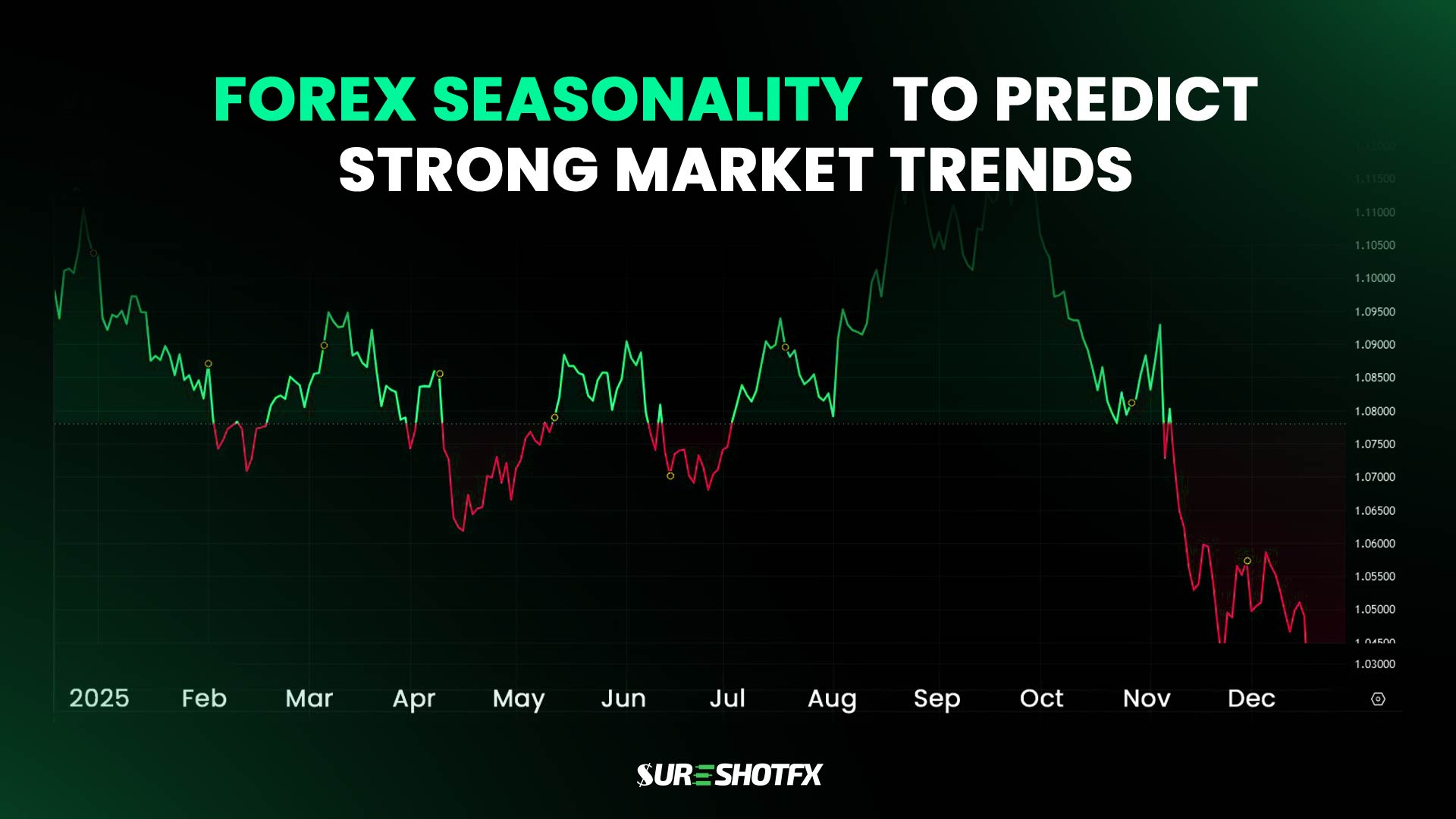
Did you know that June to August is considered the worst time for Forex trading? Now, you might be thinking about how professionals can confidently predict such trends.
Yes, certain months of the year are known for strong market trends, while others are for quiet, low-volume trading. These recurring patterns in different months are known as Forex seasonality.
If you learn seasonality in Forex trading, you can predict the trends and find more opportunities in the Forex market. So, let’s dig deeper to learn more about how Forex seasonality works and what opportunities are waiting in the upcoming trends.
What is Seasonality In Forex Trading?
Seasonality in Forex trading refers to the repeating price movement in the Forex market that happens during a specific time of the year. Every year, the market pattern seems to be the same for specific months. This has been happening for several decades, which helps traders predict market movements.
This is similar to the stock patterns. You see, certain stocks perform better in some specific months of the year; major Forex pairs show similar patterns in price movement during certain months throughout the year.
If we take a look at some of the common Forex market trends based on the previous 20-30 years of market patterns,
- The USD often strengthens in November and weakens in December
- September has been the worst month for the GBP/USD pair
- May is often bullish for JPY
Why Seasonality Matters in Currency Markets
Understanding Forex seasonality helps you to align with market liquidity and volatility shifts, ensuring precise entries and reducing risks. Besides, seasonality helps to predict-
- Market Liquidity: You can know the time when market liquidity rises or dries up and act according to that.
- Currency Volatility Cycles: You can anticipate the time when a spike in price movements is likely to occur to close with profits.
- Holiday Market Trends: Knowing the holiday trends works similarly to the news filter. You can learn the market trends during the quarter ends or during holidays and adjust trade positions according to that trend.
How Forex Seasonality Affects Market Liquidity and Volatility
Yearly economic events, holidays, and institutional announcements influence the market volatility and liquidity, with predictable liquidity patterns across major currencies.

Let’s break down how FX seasonality affects market volatility and liquidity:
- Impacts on Liquidity:
When institutional traders and hedgers are on holiday, such as in the month of August and at the end of December, overall trading volume decreases. As a result, this affects the market liquidity in a great way. Lower trade volume creates lower liquidity.
Additionally, different announcements and steps taken by the central banks and hedge funds also impact market liquidity.
Portfolio rebalancing near the fiscal quarter, balance sheet updates, and year-end updates can either strengthen or weaken a currency, affecting the market liquidity with a recurring market pattern. - Impacts on Volatility:
The price fluctuations in the Forex market never remain the same. But some scheduled economic data releases, like the monthly US payrolls report or the year-end rebalancing, can create short-term volatility spikes.
However, during the holiday season or the period of low liquidity, the market remains volatile. At that time, a small order can cause huge price swings due to fewer traders in the market.
And this seasonal pattern has been observed for two to three decades, indicating a consistent seasonal trend in the Foreign Exchange market.
Key Seasonal Trends in the Forex Market by Quarter (Q1-Q4)
Lower liquidity at the end of December is a prevalent seasonal trend in the Forex market. Besides, such other seasonal market patterns are also available. You can align strategies to overcome Q1 rebalances or Q4 bullish spikes.
Here’s an example table of seasonal pairs for different periods:
| Seasonal Pairs | Typical Period | Seasonal Tendency | Underlying Drivers |
|---|---|---|---|
| EUR/USD | November/December | Tend to rise | Year-end portfolio rebalance, dollar weakens |
| GBP/USD | October & April | Tends to rise with volatility | UK winter season & Fiscal year |
| USD/JPY | October & March | USD Tends to rise | After the Summer effect & the Fiscal year |
| AUD/USD | January & June | Strong Performance | After holiday effects & Increased demand |
After analyzing the historical data and economic indicators, we have come up with the following seasonal pattern for different quarters so that you can learn and use it to maximize your next profits.
Oh, we also showcase quarterly Forex seasonal patterns for some popular currency pairs.
1st Quarter (Q1: January–March)- Volatility and Reversal Season
January, February, and March are the months of the 1st Quarter, or Q1. The new year is a new beginning of the Forex transactions and pricing with fresh positioning and stronger moves.
After December’s fewer trade participants and lower liquidity, January comes with a higher liquidity pool, creating breakout and reversal trends. Strategies used during this period are often known as the January liquidity return strategy.
What is the January Effect in Forex Seasonality? The January Effect is the market trend when the Forex market seems to be highly volatile due to the market opening after December’s holiday closing. This effect is considered to be an anomaly or persistent until the pattern shifts. For example, the Australian dollar (AUD) shows strength this month, creating opportunities. Small-cap currencies and traders getting back to trading create volatility spikes in the currency market in this quarter. For example, the most common and most traded pair, EUR/USD, shows a bullish trend in January. That’s why it is also called the January Bull trend. |
What are the February Key Patterns? February continues with volatility from central bank meetings and economic data releases. AUD/USD weakens seasonally, influencing market momentum. |
What Strategies are Prevalent in March? In March, the Forex market rebalances for the next quarter. The Japanese Yen (JPY) creates opportunities due to fiscal year-end, while NZD/USD tends to fall. |
2nd Quarter (Q2: April–June)- Trend Continuation Season
April, May, and June comprise the second quarter, or Q2. Market liquidity seems stable during this quarter, indicating a trend-following phase. This time is perfect for the trend-following traders with seasonal momentum forex strategy setups.
At the start of Q2, the British Pound (GBP) shows huge trade opportunities, as April is the fiscal year for the UK. And this trend has been prevalent for the last 10 years.
Additionally, EUR/USD continues its profitability and bullish trend in March, April, and May. So, choosing this pair can bring more opportunities for the retail traders.
April comes with a national holiday- Star Sunday, when traders get a chance to upgrade trading tools at exclusive offer plans. So, make sure you prepare for that day.
During May, the USD shows strength, resulting in more profit opportunities, while the market moves weakly at the quarter’s end. However, due to the Summer vacation time in May, many traders seem to be selling stocks in May, which is called ‘Sell in May and Go Away’ strategy.
The historical trade data from Market Watch shows that during May, traders believe the market is slowing down due to summer vacation. However, this trend is mostly applicable to the stock market, rather than the Forex.
The AUD/USD and CAD/USD pair is strengthened in June due to the Australian Winter season. Similarly, the NZD/USD tends to be profitable with a bullish trend at the end of June.
3rd Quarter (Q3: July–September)- Market Slowdown Season
The 3rd quarter includes July, August, and September. This Summer season seems to show a relatively quieter and calmer market.
EUR and USD have lower volatility and lower liquidity as well, as many Europeans and Americans take their Summer vacation. But historically, EUR/USD shows a Bullish trend in September. Maybe that is why June to August is considered the worst time for Forex trading. This season is known as “summer doldrums.”
GBP continues to offer strong opportunities in June and July, but you may find a bearish trend in August and September.
Again, the USD/JPY shows a seasonal strength trend in August. But it goes bearish with lower liquidity in September due to the Japanese Autumn season.
The strong bullish pattern continuing for AUD/USD shows price fluctuation around August. But in September, AUD/USD historically has seen bearish performance with an average of a 0.32% drop since 1971.
Note: EURO tends to show strength in the Summer due to the increase in tourism within the Eurozone only. |
4th Quarter (Q4: October–December)- Stronger Bullish Forex Seasonality
This is the final quarter, meaning the Q4 season that typically shows the volatility peaks. These last 3 months of the year come with huge volatility spikes and liquidity pools in the Forex market, creating huge opportunities for traders of every level.
Q4 Forex Seasonality (Based on 2014-2024 Historical Data)
| Best Currency Pairs | October Trend | November Trend | December Trend |
|---|---|---|---|
| EUR/USD | Bullish | Bearish | Mild Bullish |
| USD/JPY | Bullish | Strong Bullish | Bearish Reversal |
| GBP/USD | Bullish Start | Volatile, Sideways | Slightly Bullish |
| USD/CAD | Bullish | Bullish Volatile | Neutral |
| EUR/JPY | Bullish | Strong Bullish | Performance Drop |
| AUD/USD | Range | Slightly Bullish | Volatile |
| NZD/USD | Weak | Slight Bullish | Weak |
Institutional investors, hedgers, and portfolio managers rebalance their portfolios at the quarter endings. October to December is full of holidays like Christmas, Thanksgiving, and New Year’s, offering a profitable season with reliable trends, which is why traders focus on and utilize this last quarter of the year.
During this quarter, the market underwent several trends. Here they are:
October Seasonal Forex Pattern
Prominent trends appear in October, showing a market shift from the slow Summer season to a volatility spike. EUR/USD and GBP/USD show a higher volatility with a bullish trend during the month of October.
This year, Gold signals have performed better, with a net gain of over 8165 pips by SureShotFX Gold VIP signals. |
However, the USD/JPY shows a little weaker trend with bearish performance this month. On the other side, the AUD/USD shows a mixed performance in October- neither too volatile nor too stable.
At the beginning of October, the Halloween trading effect starts. And this Halloween effect is prevalent as a seasonal trend from October to April, particularly in the stock market.
However, GBP/USD has been showing strong performance in October since 1971. And the October 2025 performance report by StoneX shows that GBP/USD has an almost +0.26% return on average.
Seasonal Forex Pattern in November: The News-Driven Market
November is best known for the strong directional move in the currency market due to different economic data releases, like institutional meetings and announcements, US non-farm payroll reports, portfolio rebalancing, etc.
Besides, the month of November comes with some pre-holiday trends filled with offers and deals like Black Friday offers and Cyber Monday. Therefore, retail traders look for opportunities to upgrade trading tools and prepare for the best performance ahead.
SureShotFX is offering Mega Black Friday Sale up to 70% on All VIP Signals . |
These holiday shopping seasons create a momentum acceleration in major currency pairs with strong bullish performance, with an increase in Q4 retail sales.
Historically, November to April shows higher trading volume and price gain, helping traders in investment decisions, such as predictable price movement, risk management, etc.
And USD tends to show strong performance during November and early December based on the past 10 years of historical trade data. So, most of the major pairs show a strong bullish trend, particularly the USDCAD, EURUSD, and USDJPY.
December Low Liquidity Forex Trend
December is well known for stock selling and the US bearish trend. Until Christmas Eve, major Forex pairs show pretty good performance with profitable return opportunities.
But the end of December shows low liquidity as a result of the major holiday effect: Christmas, Thanksgiving, and New Year’s Eve. However, this time is a strong time for the US stock market, which is best known as the ‘Christmas Rally.’
Historical data shows that the EURUSD pair benefits from the year-end volatility across the London and New York markets with a mainly bullish trend.
- USDJPY shows weaker performance than EURUSD because of the holiday low volatility effect. But Bank of Japan and US economic releases can create a little bit of price movement with little to no opportunities for the retail traders.
- GBPUSD remains volatile during December due to the economic data release by the Bank of England. So, there is less opportunity for the retail traders. However, institutional trades rebalancing portfolios might look for some opportunities with some short-term trends.
- As the USDCAD pair is linked to the oil market, this pair shows some repetitive cycle trends with strong performance. So, breakout trends are profitable for this pair in the first two weeks of December.
- Last but not least, NZD/USD, USD/CHF, and AUD/USD show lower liquidity with no profitable opportunities because of major holidays and year-end capital flows.
Note: From December 25th onward, the Forex market enters the ‘holiday mode’, creating lower liquidity. |
How to Trade Forex from October to April – The Seasonal Edge
Focusing on the major Forex pair only, you can easily trade with profits during this period. October to April is considered the best time for Forex trading due to major institutional activities and holiday trends.
From the holiday Q4 season to the liquidity return Q1 season, it shows the least volatile to the most volatile period with profitable opportunities, especially for beginner retail traders like you. So, you must learn how to use seasonality in your trading.
You might see people suggesting not to trade in December, but the multi-award-winning Forex trader Ndemazeah Godlove said,
“December is the most underrated profitable month.”
Why? Because during these seasons, institutional activities are mostly active with a strong liquidity pool, creating huge opportunities.
Here’s how to trade Forex during the holiday season:
Choose the Best Time
Forex market opening and closing hours change across different sessions during March, April, October, and November. So, choose the best trading hours according to your session zone for the best profit gain.
However, it is always recommended to trade during the London-NewYork overlap session for higher liquidity and volume.
Choose the Best Pair
Trading the major currency pair is ideal and recommended. However, based on the forex trading holidays and FX seasonality, choose the pair that has liquidity and stability.
For example, trading EURUSD with the best October forex volatility strategy shows a higher profit return, while trading USDJPY comes with higher risk at this time, as it seems the USD or JPY to weaken in December.
Manage Risk According to FX Seasonality
Be ready for different seasonal trends and volatility shifts. For example, following the winter trend-following forex strategy will not be profitable at the time of the New Year forex breakout strategy.
Check historical data, analyse the yearly charts for fundamental analysis, and find out the seasonal trends of a pair for a particular time.
Choose the Best Strategy:
Choosing the best Forex strategy that aligns with the season is important. Scalping with high-frequency trading during the holiday year-end season is like willingly risking your capital. So, make sure you know when day trading is profitable and when swing trading is profitable.
The best beginner strategy for every Forex seasonality is to follow expert trades. And if you don’t want to take the hassle of analysis and chart monitoring, try the SureShotFX free Forex signals.
How SureShotFX Signals Can Ensure Profitable Trades in Every Season

With expert-analyzed signals and trading resources, you can catch profitable trades in every season. No analysis, no continuous monitoring, only profitable trades backed by seasoned experts.
SureShotFX offers both free and paid VIP signals for Forex, Gold, and indices trading. Our seasoned trade analysts create each trade signal that aligns with every seasonal trend with accuracy.
Additionally, SureShotFX Algo, an automated trading system, offers Forex scalping signals backed by expert strategies and backtesting that can give your trading an edge, no matter what level of trading knowledge you have.
Seasonal Forex Trading Tips for Beginners
Follow major pairs, avoid thin holiday markets, and analyze historical data before each quarter. Besides, some expert tips are as follows:
- Always set your trading strategy according to seasonal trends to avoid thin liquidity.
- Adjust your seasonal trading strategy based on the season and market liquidity
- Analyse historical data from 10 or 20 years to ensure the recurring patterns
- Never avoid economic events and always plan for the economic calendar trading
- Track economic indicators like the interest rates, GDP, inflation, etc. to stay updated about seasonality
- Backtest every forex strategy for the best performance
- Never risk your capital during the holiday seasons like Christmas and Thanksgiving
- Always use Stop-Loss (SL) for every trade you open.
- Never hold trades for a long time or swing trades during the holiday season
- Keep a trading journal and review your trading setup yearly, and improve
- Be careful of the market liquidity and stay updated
- Never overtrade in the greed of profit during holiday volatility hours
- Never let emotions come into your trading strategy
Conclusion
Forex seasonality does not guarantee you profit, but yes, it helps recognize recurring opportunities, as these have been prevalent in the market since 1971. So, knowing these seasonal Forex trends can help adjust your trading strategy effectively.
Whether you are a beginner or an experienced trader, after reading this comprehensive guide, you now have the gist of which pair is profitable for which season. Now, you can craft your profitable trading strategy for different seasonality.
However, if you want to avoid the strategy plan, follow the SureShotFX Forex signal with 99% accuracy and a 24/7 live human support team. Contact SSF Support now to learn more.
FAQs

October-November and March-April are the best seasons for Forex trading.
No, Forex seasonality works for specific currency pairs for a specific season.
Forex seasonality is almost reliable, as this has been proven based on 30 to 50 years of historical trading data. Fundamental and technical analysis is recommended.
A trend-following or breakout strategy is best for trading during the high-liquidity phase from October to April.